Let us be real: AI freaks a lot of people out. If your main experience with AI comes from Terminator movies and LinkedIn posts from people who say “embrace the future” while offering no actual advice, we understand the confusion. Every other headline screams about robots taking jobs, machines outsmarting humans, or the end of creativity as we know it. If that stuff makes you nervous, you are not alone. You are, in fact, in the majority.
But here is the thing: most of those fears are overblown. And the people who are actually using AI every day? They are not scared. They are saving time, learning faster, and getting ahead. Not because they are tech geniuses. Because they just started. While everyone else was still reading think pieces about whether to be afraid, they quietly opened a tab and typed a question.
This guide breaks down the real chances AND risks of AI, explains why you do not need to panic, and gives you a simple step-by-step plan to become AI-confident in 30 days.
Part 1: The Real Risks of AI (Honest, No Sugarcoating)
Let us not pretend AI is perfect. It is not. Here are the actual risks you should know about:
1. AI Gets Things Wrong
AI can sound incredibly confident while saying something completely false. This is called a “hallucination.” It does not mean AI is broken. It means you need to double-check important information, just like you would with anything you read online. If we stopped using every tool that occasionally got things wrong, we would also need to stop using the internet, GPS, and weather forecasts.
What to do: Use AI as a starting point, not the final answer. For anything that matters (health, legal, financial), always verify.
2. Privacy Concerns
When you type something into ChatGPT or any AI tool, that data goes to a server somewhere. Most companies have privacy policies, but the rule is simple: do not share anything you would not post on social media.
What to do: Never enter passwords, bank details, or sensitive personal information. Use privacy settings in your AI tools. Read our AI Safety Guide for the full breakdown.
3. Job Changes
This is the big one. The one that keeps people up at night, right between “did I lock the front door” and “what am I doing with my life.” Will AI take your job? Honest answer: probably not entirely, but it will change it. Some tasks that used to take hours will take minutes. Some roles will evolve. Very few will disappear completely.
But here is what nobody talks about: every major technology shift in history created more jobs than it destroyed. The internet killed video rental stores but created millions of jobs in e-commerce, social media, app development, and content creation.
What to do: Learn to use AI as a tool in YOUR job. The person who uses AI will outperform the person who refuses to. See how AI can save you hours at work every week.
4. Misinformation
AI can generate fake images, fake text, and fake videos. This is a real concern for society. But it is not a reason for YOU to avoid AI. Avoiding AI because it can create misinformation is like refusing to learn to read because some books contain fiction. It is a reason to learn how AI works so you can spot the fakes. Our guide on AI fake profiles and scams shows you what to watch for.
What to do: Be a critical thinker. Question sources. If something seems too perfect or too outrageous, it might be AI-generated.
Part 2: The Real Opportunities (This Is the Exciting Part)
Now let us talk about why millions of people are excited about AI. These are not future promises. These are things you can do TODAY.
1. Save Hours Every Week
AI can draft emails, summarize documents, create presentations, plan meals, organize your schedule, and handle dozens of tedious tasks in seconds. Most people who start using AI save 5-10 hours per week. That is an entire workday.
2. Learn Anything Faster
Want to understand investing? Learn a new language? Figure out how your car engine works? AI is like having a patient, knowledgeable tutor available 24/7 who never judges you for asking basic questions.
3. Level Up Your Career
People who know how to use AI are already getting promoted faster, landing better jobs, and starting side businesses. This is not hype. Companies are actively looking for people who can work with AI tools.
4. Create Things You Never Could Before
Not a writer? AI helps you write. Not a designer? AI helps you design. Not a coder? AI helps you build. The barrier to creating professional content has never been lower.
5. Make Better Decisions
AI can analyze data, compare options, research topics, and present information in clear formats. Whether you are choosing a health insurance plan or deciding where to invest, AI helps you make informed choices.
Part 3: Why You Do Not Need to Be Afraid
Here is the perspective that changed everything for me:
AI is a tool. Like a calculator. Like the internet. Like a smartphone.
When calculators came out, people worried that nobody would learn math anymore. When the internet arrived, people said it would destroy libraries and real human connection. When smartphones appeared, people predicted the end of face-to-face conversation.
All of those technologies changed things. None of them destroyed the world. And the people who learned to use them early? They had a massive advantage.
AI is exactly the same. It is powerful, it is new, and it can feel overwhelming. But it is a tool. And tools are only dangerous when you do not understand them. The best thing you can do is learn.
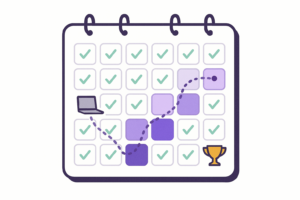
Part 4: Your 30-Day Plan to Become AI-Confident
You do not need to become an expert. You just need to become comfortable. Here is your plan:
Week 1: Just Start
- Day 1-2: Create a free account on ChatGPT or Claude. Just sign up. That is it.
- Day 3-4: Ask AI something simple. “What should I cook for dinner?” or “Explain compound interest like I am 12.” See what happens.
- Day 5-7: Use AI for one real task. Draft an email, summarize a long article, or plan your weekend. Read our Complete ChatGPT Beginners Guide for help.
Week 2: Build a Habit
- Day 8-10: Use AI every day for at least one task. Emails, brainstorming, research, cooking ideas, anything.
- Day 11-12: Learn to write better prompts. Read our Prompt Writing Guide. This is where the magic happens.
- Day 13-14: Try asking AI to explain something you have always wanted to understand. Taxes. Investments. How your WiFi router works. Go deep on one topic.
Week 3: Explore and Experiment
- Day 15-17: Try a second AI tool. Canva AI for design, Perplexity for research, or Grammarly for writing. Check our Best AI Tools list.
- Day 18-19: Use AI for something creative. Write a short story, plan a dream vacation in detail, or redesign your resume.
- Day 20-21: Read about AI safety and privacy so you feel confident about what to share and what not to.
Week 4: Make It Yours
- Day 22-24: Identify the 3 tasks where AI saves you the most time. Make these part of your routine.
- Day 25-27: Show someone else what you have learned. Teaching is the best way to solidify knowledge.
- Day 28-30: Reflect on what changed. How much time are you saving? What feels easier? What do you want to explore next?
Where You Will Be After 30 Days
You will not be an AI expert. But you will be someone who:
- Uses AI confidently every day
- Knows which tools are worth using (and which are not)
- Saves real time on real tasks
- Understands what AI can and cannot do
- Does not panic when they read AI headlines
And that puts you ahead of 90% of people who are still just talking about AI instead of using it.
The Bottom Line
AI is not the enemy. Ignoring AI while forming strong opinions about it — that is the real problem. The people who will struggle are not the ones who use AI. They are the ones who refuse to learn about it.
You do not need to be a tech person. You do not need to understand how neural networks work. You do not need to have an opinion on the singularity. You just need to start. Open ChatGPT, type a question, and see what happens. The worst outcome is that you get a mediocre answer and close the tab. You will survive.
That is literally all it takes.
The best time to start learning AI was a year ago. The second best time is today.
Affiliate Note: Ready to start your AI journey? Notion gives you one place to organize your learning, save prompts, and track your progress. Free to start.
Keep learning: Find out what AI actually is, build your personal AI toolkit, or see what is actually happening in AI right now.