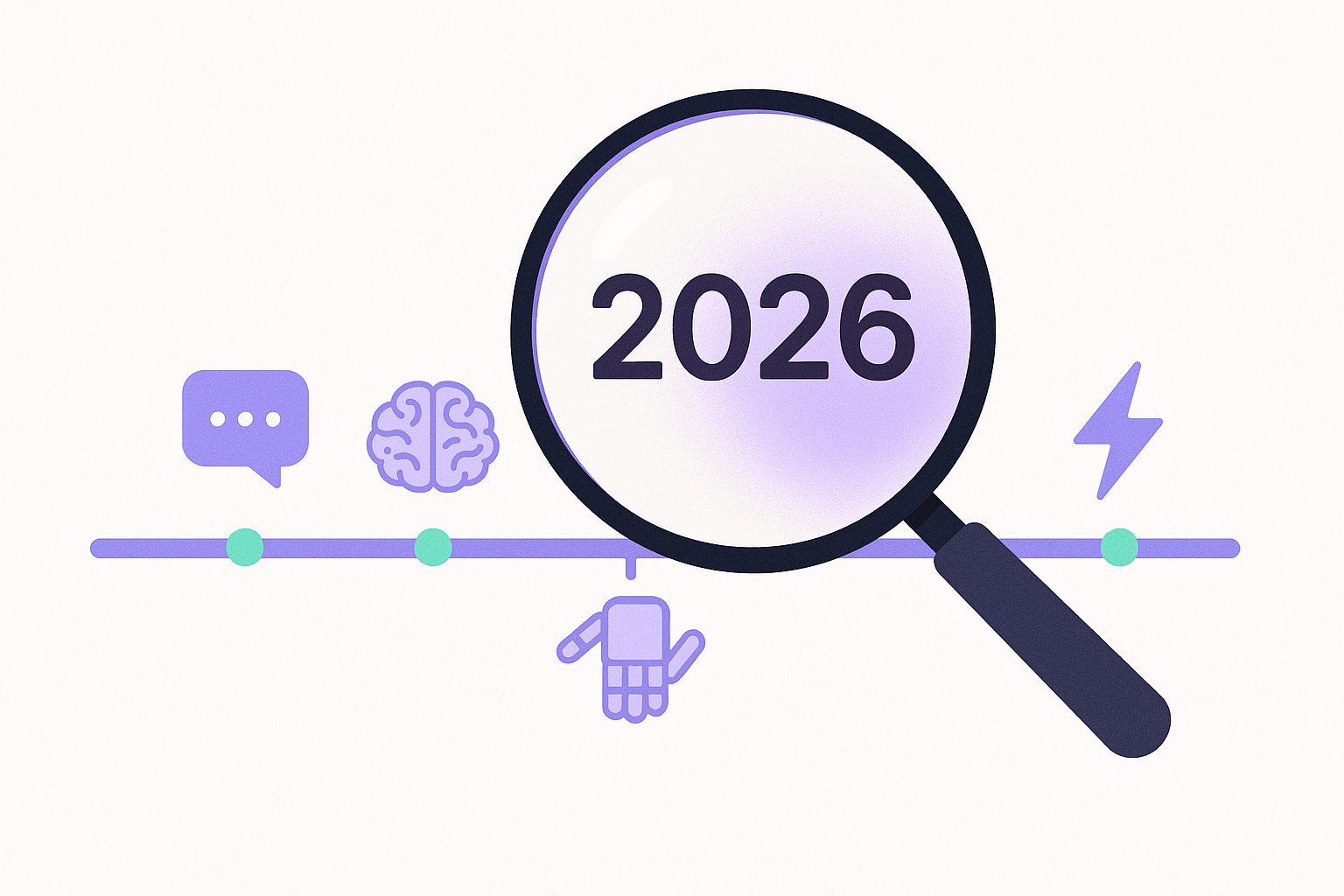
Every week there is a new headline about AI either saving the world or destroying it. The reality, as usual, is somewhere in the boring middle. Here is what is actually happening in the AI world in 2026 – explained simply, without the hype.
The Big Picture
AI in 2026 is like the internet in 2000. It is clearly important. It is clearly going to change things. But most people are still figuring out what to actually do with it. And that is totally fine.
Here is what you need to know.
What Has Changed Since 2024
Two years ago, ChatGPT was the new shiny thing everyone was talking about. Now in 2026:
- AI is everywhere. It is built into your email, your phone, your office apps, your search engine. You are using it even when you do not realize it.
- It got much better. AI answers are more accurate, more nuanced, and more useful than they were in 2024. Fewer “hallucinations” (AI making stuff up).
- More competition. It is not just OpenAI anymore. Google (Gemini), Anthropic (Claude), Meta (Llama), and dozens of startups are all pushing forward. See our head-to-head comparison of the big three.
- Prices dropped. Many AI tools now have generous free tiers. You can do a lot without paying anything.
What AI Can Do Well Right Now
Let us be honest about what works:
- Writing and editing – AI is genuinely great at this. Emails, reports, social media posts, even creative writing.
- Research and summarizing – give it a long document and get a clear summary in seconds.
- Coding – AI can write, debug, and explain code. Developers use it daily.
- Image generation – tools like Midjourney create stunning visuals from text descriptions.
- Translation – AI translation is now good enough for most everyday situations.
- Data analysis – upload a spreadsheet and ask questions in plain English.
What AI Still Cannot Do
Despite the headlines, AI still has clear limits:
- It does not truly “understand” anything. It predicts what words come next. That is powerful, but it is not thinking.
- It makes mistakes confidently. AI can state wrong facts with total confidence. Always double-check important information. For context: people also predicted the metaverse would replace offices. We are still using email.
- It has no common sense. Ask it something that requires real-world experience, and it might give you a technically correct but practically useless answer.
- It cannot replace human judgment. For decisions that matter – medical, legal, financial – AI is a helper, not a decision-maker.
Jobs: Should You Be Worried?
This is what everyone wants to know. Here is the honest answer:
- Some jobs will change. Tasks that involve repetitive writing, data entry, or basic analysis will increasingly be done by AI.
- Very few jobs will disappear completely. Most jobs are a mix of tasks, and AI handles some better than others.
- New jobs are appearing. Prompt engineer, AI trainer, AI ethics officer – roles that did not exist three years ago.
- The best strategy: Learn to use AI as a tool in YOUR job. The person who uses AI will outperform the person who does not.
What to Watch in the Rest of 2026
Here are the trends that actually matter:
- AI Agents – AI that can do multi-step tasks on its own (book a trip, research a topic, manage your calendar). This is the next big thing.
- Local AI – AI that runs on your phone or laptop without sending data to the cloud. Better privacy, works offline.
- AI Regulation – Governments worldwide are creating rules for AI. The EU AI Act is already in effect. The US is working on its own framework.
- Multimodal AI – AI that handles text, images, audio, and video all at once. This makes AI tools much more versatile.
Confused by the jargon? Our AI Buzzword Glossary decodes all of these terms in plain English.
What Should You Do?
If you are new to AI, here is your simple action plan:
- Try one AI tool this week. ChatGPT or Claude are the best starting points. Both have free versions. Our ChatGPT Beginners Guide gets you started in 5 minutes.
- Use it for something real. Do not just play around – use it for an actual task: write an email, plan a trip, summarize a report.
- Stay curious, not scared. AI is a tool. Like any tool, it is useful when you know how to use it and harmless when you do not. Read our AI Is Not Scary guide if you need some reassurance.
The people who will do best in the AI era are not the experts. They are the curious ones who start learning now. The worst that can happen is you waste 30 minutes and learn something. Statistically, that still beats most meetings.
Affiliate Note: Want to stay on top of what AI can actually do? Notion is a great place to bookmark articles, organize your notes, and track the tools that matter. Free to start.
Ready to dive in? See the 10 Best AI Tools for Beginners, check out the best AI video generators, or learn how to make money with AI.