So you asked ChatGPT for a scientific study. It gave you a title, authors, even a DOI number. Looks legit. Except the study does not exist. It never did. Your AI just invented it with the confidence of someone who has definitely read the book they are recommending at a dinner party.
Welcome to the wonderful world of AI hallucinations. It sounds dramatic, but once you understand what is happening, it is actually pretty easy to deal with. No panic required.
What Is an AI Hallucination?
An AI hallucination is when your AI makes something up and presents it as fact. Not a typo. Not a misunderstanding. It straight-up invents information and delivers it with zero hesitation.
This can look like:
- Invented facts — statistics, dates, and numbers that do not exist
- Fake sources — studies with real-sounding author names but completely made-up content
- Constructed connections — logical-sounding explanations that are just not true
- Absolute confidence — no “maybe”, no “I think”, just stated as gospel
The tricky part: the better the AI writes, the harder it is to spot. The answer reads like a textbook. It is just that the textbook does not exist.
Why Does This Happen?
Here is the thing most people do not realize: AI language models do not “know” things. They calculate probabilities. They have learned which words tend to follow which other words, what answers typically look like, and what structure sounds convincing.
That is the difference between “writing well” and “knowing the truth.” Your AI is really, really good at the first one. The second one? That is your job.
The 5 Most Common Triggers
1. Missing information
When the AI does not have the answer, it fills the gap with whatever sounds most plausible. Instead of “I do not know,” you get a confident-sounding guess.
2. Vague questions
“Tell me about cancer” is basically an invitation for the AI to start making things up. The less specific your question, the more room for creative fiction.
3. Things that do not exist
Ask about a book that was never written, and the AI will invent it — complete with author, publisher, and page count. Impressive, honestly. Just not helpful.
4. Outdated training data
Every model has a knowledge cutoff date. Everything after that is a gray zone — and the AI guesses instead of admitting it.
5. Complex specialized topics
Medicine, law, science, finance — these are where hallucinations get really dangerous. Studies show hallucination rates of 20 to over 80 percent for medical questions, depending on the task type.
Quick Clarification: Mistakes Are Not Hallucinations
Not every AI error is a hallucination. There is a difference:
- Regular mistake: The AI miscalculates, misunderstands your question, or phrases something badly
- Hallucination: The AI invents content and presents it as verified fact
A math error is annoying. A fake study that you cite in your thesis is a career problem.
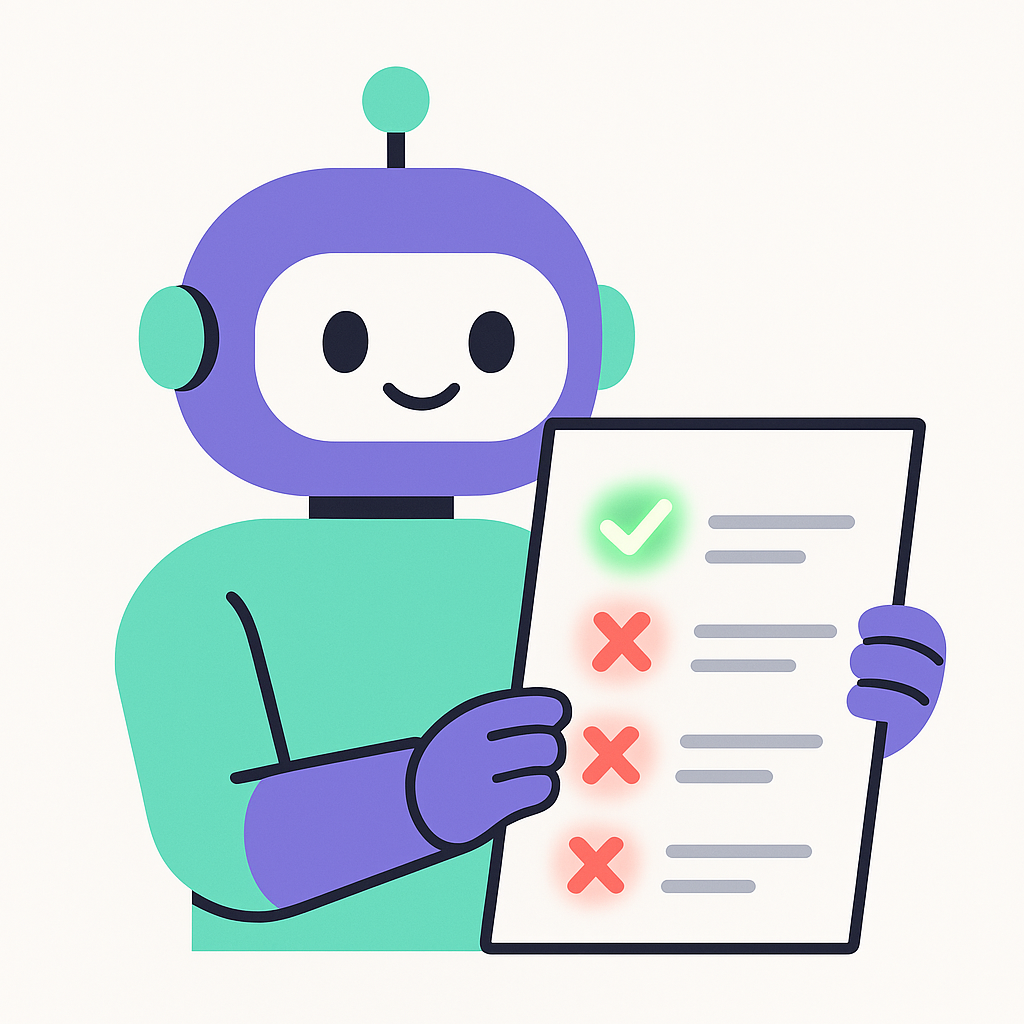
5 Warning Signs That Your AI Is Hallucinating
Warning Sign 1: Over-the-Top Confidence
Words like “definitely,” “guaranteed,” or “all experts agree” — without a single verifiable source. Real experts are usually more cautious than a hallucinating AI.
Warning Sign 2: Sources You Cannot Find
Studies with untraceable authors, links that go nowhere, books with oddly specific titles. If you cannot Google the source in 30 seconds, it probably does not exist.
Warning Sign 3: Suspiciously Perfect Answers
The AI answers every question instantly, never shows doubt, and knows every number exactly. That is not competence — that is guessing with style.
Warning Sign 4: Contradictions
The AI says one thing in response 3 and something different in response 1. This happens a lot with hallucinations because made-up facts are hard to keep track of — even for an AI.
Warning Sign 5: Smooth but Empty
The answer sounds smart and professional but contains no concrete, verifiable details. Lots of words, little substance. We have all met that person at a networking event.
Do Not Panic — But Do Use Common Sense
OK so now you have read a lot about invented facts and dangerous errors. Maybe you are thinking: should I even use AI at all?
Yes. Absolutely.
Here is what matters: hallucinations are only a real problem when important topics are involved. If you ask the AI to write a birthday speech, brainstorm project ideas, or rephrase an email — it literally does not matter if the AI makes something up. Those are creative tasks. It is allowed to invent things there.
It only gets critical when you take AI answers as facts — especially for:
- Health and medicine
- Legal questions and contracts
- Finance and taxes
- Science and citations
- Decisions with real consequences
For those situations, there is one simple strategy that takes about 2 minutes:
1. Ask your question in 2-3 different AI tools (e.g. ChatGPT, Claude, Gemini)
2. Compare the answers — take the most plausible parts from each
3. If the answers contradict each other: Google the specific point — a quick search usually settles it
Think of it like getting a second opinion from a doctor. You would not blindly trust one diagnosis when something important is at stake.
Prompts That Reduce Hallucinations
You can actually make the AI less likely to hallucinate just by how you ask. Three prompt add-ons that work immediately:
Add-on 1: Ask for honesty
Add to your prompt: “If you are not sure about something, say so honestly instead of guessing.”
Add-on 2: Demand sources
“Only include information you can back up with a verifiable source. If you do not have a source, leave it out.”
Add-on 3: Separate facts from opinions
“Clearly separate verified facts from your own estimates. Label anything uncertain as a guess.”
These work in any AI — ChatGPT, Claude, Gemini, Copilot. You can use them individually or combine them. The more you include, the more careful the AI becomes.
For everyday tasks, you do not need any of this. Just type away. But when you are dealing with something where a mistake has consequences — those 30 extra seconds are the difference between “well used” and “expensive lesson.”
Where Hallucinations Get Actually Dangerous
This is not just theoretical. There have been real cases:
- A lawyer in New York submitted court filings based on completely invented case law — generated by ChatGPT
- Students cited scientific papers that never existed in their theses
- Developers shipped non-existent code functions from AI suggestions into production
So yes, hallucinations matter. But the fix is not “stop using AI.” The fix is “check the important stuff.” That is literally it.
Related Articles on DumbItDownAI
- AI Slop: Why 90% of AI Content Is Garbage (And How to Not Add to the Pile)
- Which AI Hallucinates the Least? The Honest Comparison 2026
- AI Safety 101: Protect Your Privacy
- ChatGPT vs Claude vs Gemini: Which Free AI?
- How to Write AI Prompts That Actually Work
Want to turn complex AI topics into simple explainer videos? Fliki lets you create professional videos from text — no camera, no editing skills needed.
The Bottom Line
AI hallucinations are not a bug someone forgot to fix. They are a fundamental feature of how language models work — they calculate probabilities, not truth.
The good news: models are getting better. Hallucination rates are dropping with every new generation. And with the right habits — precise questions, asking for sources, cross-checking what matters — you can reduce the risk to almost nothing.
For 90 percent of what you do with AI, hallucinations are a non-issue. For the other 10 percent, two minutes of checking makes you smarter than most AI users on the planet.
No fear required. Just a little common sense.
Related: Prompt Injection Explained — how hidden instructions can hijack an AI, and how to protect yourself.